
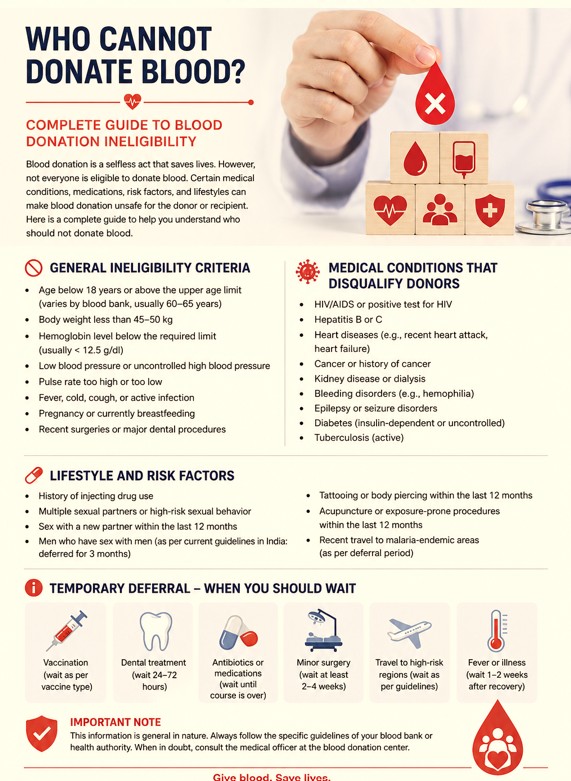

Who Cannot Donate Blood? A Complete Guide to Blood Donation Eligibility
Blood donation is one of the greatest gifts a person can give. A single donation can help save multiple lives. However, not everyone is eligible to donate blood at all times. Certain medical conditions, medications, infections, and lifestyle factors can make blood donation unsafe for either the donor or the recipient.
This guide explains who should not donate blood, temporary and permanent deferral conditions, and when a person may become eligible again.
Why Are Some People Not Allowed to Donate Blood?
Blood donation eligibility rules are designed to:
- Protect the health of the donor.
- Prevent transmission of infectious diseases.
- Ensure recipients receive safe, healthy blood.
- Maintain high-quality blood supplies.
These rules are based on medical research and may vary slightly between countries and blood collection organizations.
People Who Should NOT Donate Blood
1. People Below the Minimum Age
Most blood banks require donors to:
- Be between 18 and 65 years of age (varies by country).
- Meet the minimum weight requirement.
2. People with Low Body Weight
Generally, donors should weigh at least 45–50 kg depending on local regulations.
Lower body weight increases the risk of dizziness and other complications during donation.
3. People with Low Hemoglobin
Blood donation is not recommended if hemoglobin is below the required level.
Low hemoglobin may indicate anemia, and donating blood can worsen the condition.
4. People with Fever or Active Infection
Do not donate blood if you have:
- Fever
- Cold
- Flu
- COVID-19 (until fully recovered)
- Active bacterial or viral infections
Wait until you have completely recovered.
5. People with HIV, Hepatitis B or Hepatitis C
Individuals diagnosed with:
- HIV/AIDS
- Hepatitis B
- Hepatitis C
are generally permanently deferred from blood donation because these infections can be transmitted through blood.
6. People with Certain Heart Conditions
Donation may not be suitable for people with:
- Recent heart attack
- Heart failure
- Serious heart disease
- Uncontrolled hypertension
Consult your physician before considering blood donation.
7. People with Cancer
Some cancers permanently disqualify blood donation, while certain successfully treated skin cancers may have different guidelines.
Always follow your blood bank’s medical advice.
8. Pregnant or Breastfeeding Women
Pregnant women should not donate blood.
Breastfeeding mothers may also need to wait until a specified period after delivery, depending on local guidelines.
9. Recent Surgery or Dental Procedures
Donation should be postponed after:
- Major surgery
- Minor surgery
- Tooth extraction
- Root canal treatment
The waiting period depends on the procedure and recovery.
10. Recent Tattoo or Body Piercing
Many blood banks require a waiting period after:
- Tattooing
- Body piercing
This helps reduce the risk of transmitting infections.
Temporary Reasons to Delay Blood Donation
You may need to wait before donating if you:
- Recently received a vaccination.
- Are taking antibiotics.
- Recently recovered from malaria.
- Recently traveled to malaria-prone regions.
- Had COVID-19 recently.
- Recently donated blood.
- Recently received a blood transfusion.
Most of these are temporary restrictions.
Permanent Reasons for Blood Donation Ineligibility
Permanent deferral may apply to people with:
- HIV infection.
- Chronic Hepatitis B or C.
- Certain blood disorders.
- Serious bleeding disorders.
- High-risk medical conditions as determined by blood bank physicians.
Can You Donate Later?
Yes.
Many people who are temporarily deferred can donate again after:
- Recovery from illness.
- Completion of medication.
- Improvement in hemoglobin levels.
- Completion of the required waiting period after surgery, vaccination, or travel.
Always consult the medical officer at your local blood donation center.
Frequently Asked Questions (FAQ)
Can a diabetic donate blood?
Many people with well-controlled diabetes can donate blood if they meet all other eligibility requirements. Always follow local blood bank guidelines.
Can people with high blood pressure donate?
If blood pressure is well controlled and within acceptable limits at the time of donation, many people are eligible.
Can I donate blood while taking antibiotics?
Usually, you should wait until you have completed the antibiotic course and fully recovered from the underlying infection.
Can I donate blood after getting a tattoo?
Most blood banks require a waiting period before accepting blood donations after a tattoo.
Blood Groups Compatibility Chart (who can transfer to whom) ?
Click here > Donor and Receiver Guide
Government of India blood bank site ?
Click here > official site
Final Thoughts
Blood donation saves lives, but donor safety is just as important as recipient safety. If you are unsure whether you are eligible, consult your nearest blood bank or healthcare provider before donating.
Remember, even if you cannot donate today, you may still become eligible in the future after your health improves or the temporary waiting period ends.
Disclaimer: This article is for educational purposes only. Blood donation eligibility varies by country and blood collection organization. Always follow the guidelines of your local blood bank and consult the medical officer before donating.